


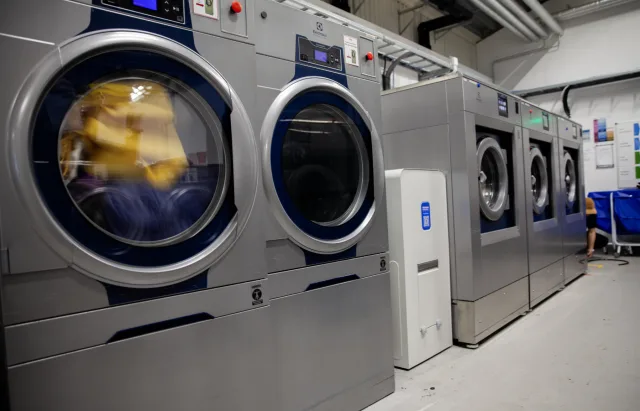
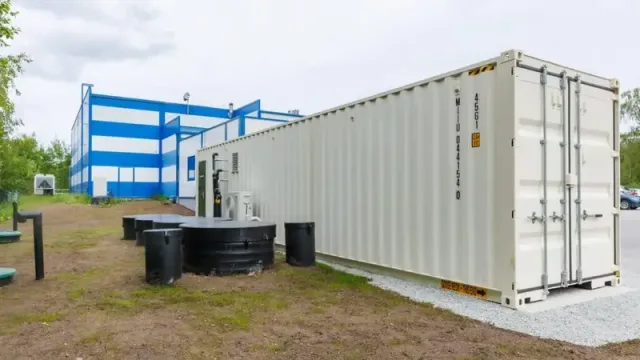
Industrial laundry water recycling, compared on payback.

Could your laundry reuse most of its wash water, and the heat in it, and how fast would that pay back? Caskade gets you real proposals from specialist manufacturers and compares them on payback, for every machine on your floor, whatever the brand.

Updated October 2026

Our guarantee

Money back*

We refund the price of Caskade Eval if:

  • you show us a feasible proposal with a better return on investment, or
  • the system does not meet the estimated payback period.

* Covers the price of Caskade Eval only, not the system or its installation. The terms are defined in the Caskade Eval agreement.

What our clients say

“External wastewater handling was costing us a lot. Caskade gave us a comparison with clear figures, and we chose the solution that fits us best.”

Owner, resort & campsite, South of Spain

Translated from Spanish

From our manufacturer panel

  • More…

Which water treatment setup pays off in your laundry?

Conventional industrial laundries use 10 to 20 litres of fresh water per kilogram of linen, and recycling brings that down to about 2 to 3.8 litres. Three setups get you there, alone or combined:

Girbau (litres per kg) · Modern Central Laundry (recycled litres per kg)

  • Rinse-water recovery tanks

    • Up to 70% less fresh water
    • Heat recovered too

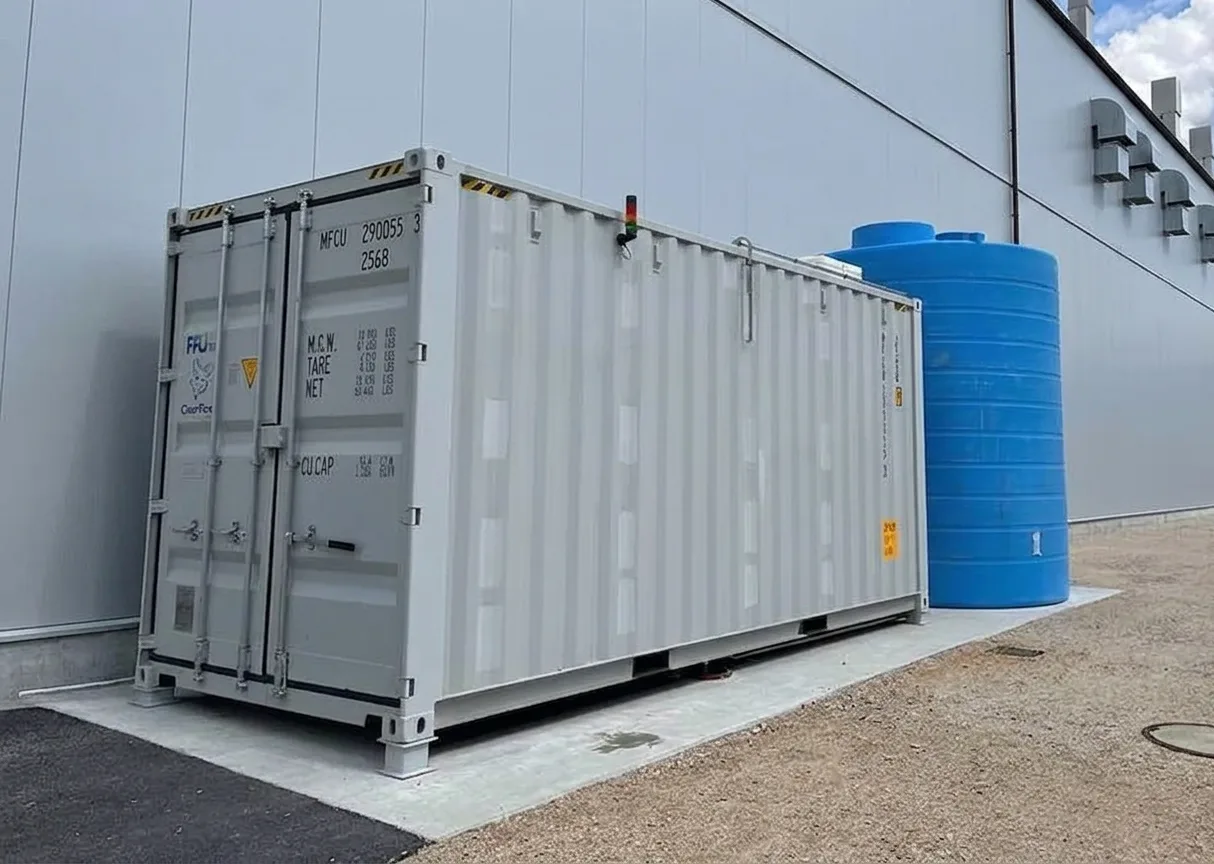
    The last rinse is still clean enough to wash with. A tank collects it and feeds it, still warm, to the pre-wash of the next load, so you heat less water too. Manufacturers quote 50 to 70% water savings with little to install.

  • Membrane recycling for the whole floor

    • 70 to 90% less fresh water
    • Heat recovered too

    Screens take out lint, then micro- or ultrafiltration cleans the combined effluent of every machine, whatever the brand. The recycled water comes back warm, and a heat exchanger on the remaining discharge preheats the cold feed water, which manufacturers say cuts gas bills by 10 to 25%.

  • Pretreatment for the final rinse

    • Fewer mineral residues in the linen

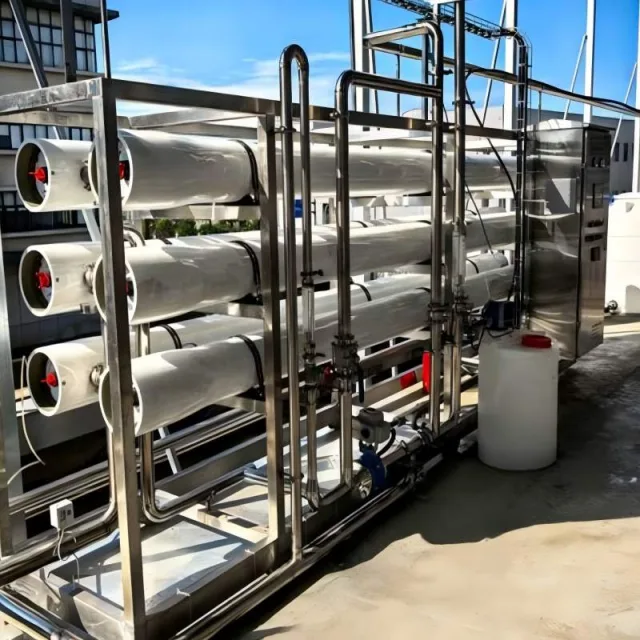
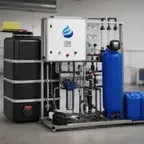
    Hard or salty water leaves minerals in the linen and scale in the machines. A reverse osmosis unit removes dissolved salts, surfactants and colour, so purified water, from the mains or from your recycling loop, can serve the final rinse. Reverse osmosis systems for process reuse recover over 90% of the water they treat.

How much water and heat savings is your laundry still throwing away?

Pick sticky figures for your floor. Results update live.

Scenario55–75%

€21,239–€28,962 / yearIndicative

  • Water and sewer

    3,300–4,500 m³ · €13,200–€18,000

    Before: 20 m³/d → After: 5–9 m³/d

  • Heat recovered

    133,980–182,700 kWh · €8,039–€10,962

    ΔT 35 °C

Girbau (up to 85%) · Fagor KRS (up to 70%) · Indicative figures. Your free first assessment works them out from your own numbers.

The savings are not just on the water meter.

Reuse cuts water purchase and discharge together, and warm recycled water cuts the heat you buy. That is why the payback case strengthens every year tariffs rise.

  • Four bills at once

    Mains water, gas or electricity to heat it, sewer cost, and detergent. Every year a tariff rises, the case for reusing water and recovering heat from the drain gets stronger.

  • 2 to 4 years typical payback

    Industry figures for a full water-reuse retrofit on a laundry floor land in this band. The shorter end shows up where tariffs and discharge surcharges are already high. We model yours from your own invoices, not a generic estimate.

The offers your local water treatment supplier can’t show you.

Your washer supplier can quote a recycling module for its own machines. Caskade gets you proposals from manufacturers across technologies and compares them on what matters: payback, net returns and fit with your floor.

OptionCAPEX totalNet gains (5y)PaybackAnnual savings
Supplier B · Option B
Not shown
21.800 €
4.6 years
121.500 €
Supplier C · Option C
Not shown
−46.900 €
5.3 years
136.200 €
Supplier D · Option D.1
Not shown
−16.700 €
7.1 years
9.800 €

Based on a real Caskade Eval, with figures adjusted. Supplier names hidden. Payback excludes running costs; 5-year net gains include them.

How laundry water recycling works: screen, filter, return.

The same three steps sit behind most systems. The right hardware depends on your linen, how soiled it is, and the space you have.

  • Screen out lint first

    Lint, hair and grit foul membranes fast. Automatic lint screens, settling tanks or oil separators take them out before any filtration starts.

  • Filter to process quality

    Micro- or ultrafiltration removes suspended solids, fats, oils and emulsified dirt. Ceramic membranes cope with hot water and strong cleaning agents better than polymer ones, and last longer.

  • Send it back, keep the final rinse fresh

    Treated water returns to the pre-wash and main wash. Most laundries keep the final rinse on fresh water to protect the finish, and some systems recover part of the detergent too, so you dose less.

Case studies: The returns we generate

37% less water per kg and 0.8 year payback
Industrial laundryOslo, NorwayPartner case

37% less water per kg and 0.8 year payback

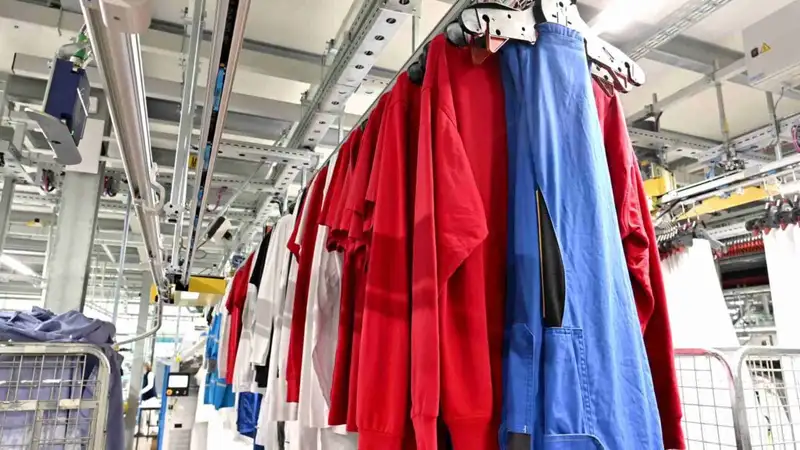
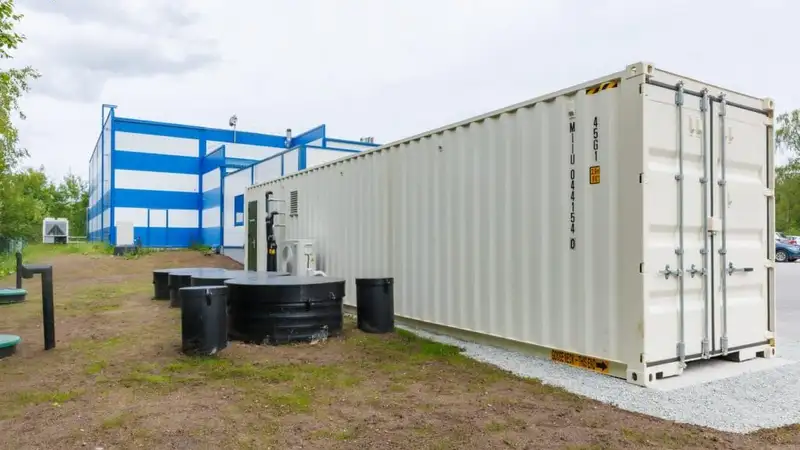
A commercial laundry in Oslo wanted lower water use. An inline process-water filter that recycles laundry water cut use per kg of textile by 37%, saved about 4 million litres in one year, and brought payback to 0.8 years as local water prices rose.
COD under 100 mg/l and lead under 0.5 mg/l
Industrial laundryGermanyPartner case

COD under 100 mg/l and lead under 0.5 mg/l

A European textile-service laundry needed sewer-compliant treatment for two streams, including lead-contaminated workwear wash water at about 22 m³/day. Two dissolved-air flotation units with chemical precipitation and a screw press brought COD from about 2,000 mg/l to under 100 mg/l and lead from about 60 mg/l to under 0.5 mg/l.

70% process water reused, ~25,000 m³ saved a year
Industrial laundryKohila, EstoniaPartner case

70% process water reused, ~25,000 m³ saved a year

A textile-service laundry in Estonia needed to cut freshwater use and wastewater discharge. A closed-loop reuse plant with an activated-sludge bioreactor and continuous quality monitoring now reuses 70% of process water on site and saves about 25,000 m³ of fresh water a year.

35% less water and 25% less energy in a resort laundry
Industrial laundryTarragona, SpainPartner case

35% less water and 25% less energy in a resort laundry

A theme-park resort needed a 15 t/day industrial laundry built from scratch in five months for its hotels. A turnkey tunnel washing line with water recirculation and heat recovery, running recycled-polyester garments at lower temperatures, uses 35% less water and 25% less energy than conventional operations.

Free first assessment

Find out if water recycling pays off in your laundry

Free. We show you which solutions could work on your site, whether they pay off, and say so plainly if the answer is not yet.

  1. Free first assessmentFree

    You get: the solutions that could fit your site, how much of your water you could reuse, and what that could save as a share of your water bill, where your data allows. If nothing pays off yet, we say so.

  2. Caskade EvalFixed fee

    Priced, comparable proposals ranked by payback, and a decision you can defend. We only go ahead if the free first assessment shows it makes sense.

  3. Offers from 3–5 manufacturers

    Real offers with prices you can use as you see fit: choose with figures in hand, take them to your board or finance team, negotiate, or go straight to the manufacturer you pick.

Your reasons (optional)

Three common ways to choose a water treatment system. None gives you a real comparison.

You spend months comparing documents from the first three manufacturers you found.

  • Ask your washer manufacturer

    You get: a recycling module for its own machines.

    Most laundry floors run machines from several makers. Each maker's module recycles water for its own equipment, on its own running-cost assumptions, and the rest of the floor stays on fresh water.

  • Ask a distributor

    You get: a choice among the few brands they represent.

    Distributors typically hold exclusive contracts with a handful of manufacturers and earn a margin on what they sell. Anything outside their catalogue, including most newer technologies, never makes the list.

  • Hire a consultancy

    You get: an engineering report, rarely with real prices.

    Consultancies are built for complex engineering and priced accordingly. Their reports seldom include vendor proposals, and their supplier networks are small.

With Caskade: Solutions you would’ve never found, at a competitive price

You get: 3 to 5 priced proposals on one baseline, ranked by payback, in weeks, not months.

  • Technologies and proposals you would never have found

    Ever heard of recirculating showers? Or electrocoagulation? From a database of 500+ specialised manufacturers across countries, we preselect the best-fitting solutions and run a structured tender between the top candidates.

  • Full cost analysis on one baseline

    We fill the data gaps and handle questions and follow-ups with manufacturers. Our Evaluation Engine runs a total cost of ownership analysis for each proposal, including running costs and delivery. You get a clear comparison, with proposals and prices attached, that will be useful in future conversations.

  • The best fit at a competitive price

    Our manufacturers know they’re competing against different technologies, not just similar products, so they price accordingly. Pick the shortest payback, the highest net return or the lowest investment, with financing options included where available, then continue with your chosen manufacturer, figures in hand.

Financed solutions

Start saving without paying the full investment upfront: financing, subsidies and deductions can spread or reduce the cost of your solution.

  • Manufacturer financing

    Some manufacturers already include leasing or deferred payment in their offer. Where they do, we include it in your Caskade Eval.

  • Subsidies and deductions

    Caskade helps you identify and apply for the subsidies and tax deductions that may apply to your project.

  • Caskade financing

    Get your solution through leasing or a rental with a purchase option, via specialised banks and lessors. Caskade arranges it with them for you; we are not the lender.

Why laundries recover their wash water

Water, sewer and energy prices move every year, and discharge rules tighten. These are the figures behind the case.

  • Fresh water and discharge get more expensive
  • Hot wash water carries energy you already paid for
  • Discharge limits tighten, including on temperature
  • Supply gets restricted in dry years

Read more from our blog and technical guides.

Questions laundry operators ask